Everything about the IELTS exam, from zero to your target band score – without the confusion
The IELTS exam often feels like a huge, scary monster to Iranian test‑takers – with all its different sections, scattered resources, and score stress. But the truth is, with the right guide and a smart study plan, you can achieve your target band score without the confusion and expensive courses. In this article, we’ve gathered everything you need to succeed in IELTS in 2026 – from the test structure and Academic vs. General differences to the best free resources and a 4‑week self‑study plan.
📑 Table of Contents
What is the IELTS Exam?
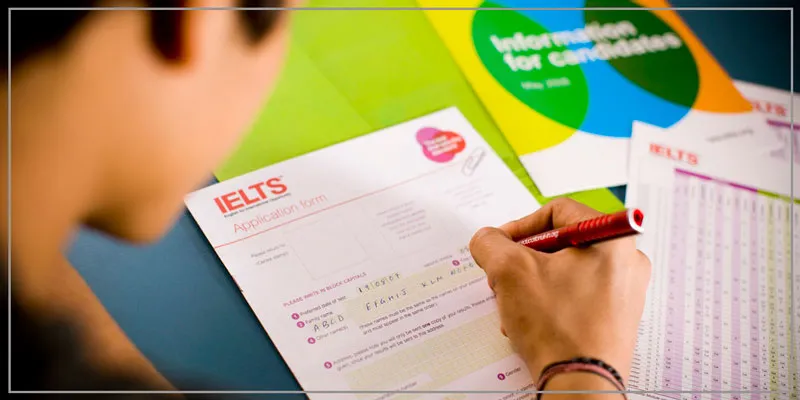
IELTS (International English Language Testing System) is the world’s most recognized English test for migration, study, and work. It is jointly managed by the British Council, IDP Australia, and Cambridge Assessment English. Every year, over 3 million people in 140 countries take the test. IELTS scores are accepted by more than 11,000 institutions worldwide, from top universities like Oxford and Harvard to immigration departments in Canada, Australia, and New Zealand.
The IELTS exam measures the four main language skills: Listening, Reading, Writing, and Speaking. The total test time is about 2 hours and 45 minutes.
Difference Between Academic and General
Many test‑takers aren’t sure which type they need. The main difference lies in the Reading and Writing sections:
- IELTS Academic: For entry into English‑speaking universities and postgraduate courses. Reading texts are taken from books, journals, and scientific articles.
- IELTS General Training: For work migration, everyday life, and secondary education. Reading texts are more practical (e.g., advertisements, notices, handbooks).
The Listening and Speaking sections are exactly the same for both types. If you’re still unsure, decide based on your final goal (study or migration).
Full Test Structure & Timing
The IELTS exam takes place in the following order (Listening, Reading, and Writing are usually back‑to‑back; Speaking may be on the same day or a different day):
- Listening: 30 minutes + 10 minutes to transfer answers. 4 sections, 40 questions. Each section features a conversation or monologue with various accents (British, Australian, American, Canadian).
- Reading: 60 minutes (no extra transfer time). 3 long texts with 40 questions. (Academic: analytical texts; General: everyday texts).
- Writing: 60 minutes. Two tasks: Task 1 – at least 150 words (Academic: describe a chart/process; General: letter writing). Task 2 – at least 250 words (argumentative essay).
- Speaking: 11–14 minutes face‑to‑face interview with an examiner. Three parts: introduction & general questions (4–5 min), talking about a specific topic with 1‑minute preparation (3–4 min), and a two‑way discussion (4–5 min).
Scoring & Band Scores
IELTS scores are reported on a scale from 0 (non‑user) to 9 (expert user) for each skill. The Overall Band Score is the average of the four skills, rounded to the nearest half or whole band. For example, if your scores are 6.5, 6.5, 6.0, 6.0, your overall band is 6.5.
Typical minimum scores: Most universities require 6.0–6.5 for undergraduate degrees and 6.5–7.5 for Master’s and PhD programmes. For work migration, a 6.0–7.0 is common. Canada’s Express Entry often requires at least 6.0 in each skill.
Best Free & Paid Resources (2026 Update)
📚 Completely Free Resources
- British Council LearnEnglish website: Interactive Listening and Reading exercises, sample Speaking tests with videos.
- IELTS Prep App (British Council): Free app with practice tests and tips.
- YouTube channels: IELTS Liz (writing & speaking tips), E2 IELTS (strategies), IELTS Advantage (Band 9 sample analysis).
- IELTS Simon website: Band 9 essay samples and past question analysis.
- Podcasts: IELTS Podcast, All Ears English (listening and speaking ideas).
📘 Essential Books (Paid)
- Cambridge IELTS Series (Volumes 10–18): Real past tests with detailed answer keys. Start from the latest volume.
- The Official Cambridge Guide to IELTS: A complete official guide from the test makers.
- Barron's IELTS Superpack: Book, audio files, and flashcards.
- Cambridge Vocabulary for IELTS (Advanced): Themed vocabulary and exercises.
4‑Week Self‑Study Plan
If you have 2–3 hours per day, follow this intensive plan:
- Week 1: Get familiar with the test format + 2 Listening and 2 Reading practice tests + review key strategies.
- Week 2: Focus on Writing Task 1 (at least 5 charts) and Task 2 (4 essays) + learn advanced structures.
- Week 3: Speaking practice using the Shadowing technique and voice recording + mock interviews.
- Week 4: Full‑length simulation tests (at least 4) + error analysis.
We also recommend 15 minutes of Shadowing every day during this period and joining our free discussion classes.
Golden Tips & Techniques for Each Skill
🎧 Listening
Quickly read the questions before the recording plays. Pay attention to keywords and numbers. Accents can be mixed, so practise with various podcasts. Be careful with spelling – a misspelled word loses marks.
📖 Reading
Master Skimming (reading fast for main idea) and Scanning (finding specific information). Spend exactly 20 minutes per text. In True/False/Not Given questions, Not Given means the information isn’t in the text at all, not that it’s opposite.
✍️ Writing
For Academic Task 1, always include an Overview in the second paragraph. Never give personal opinions. For Task 2, write a clear four‑paragraph essay: introduction, two body paragraphs (one main idea + example each), and conclusion. Use linking words like Furthermore, However, Consequently. Write at least 250 words.
🗣️ Speaking
Fluency and confidence matter more than perfect grammar. In Part 2 (Cue Card), use the 1‑minute preparation time well and cover all the bullet points. Use idioms and phrasal verbs naturally. If you don’t understand a question, politely ask the examiner to repeat it. Watch Band 9 Speaking samples to understand expectations.
Join our free Speaking classes to practiseFree Speaking Practice for IELTS at OpenEnglish
The Speaking section is challenging for many learners. At OpenEnglish we hold free weekly discussion classes in English. You can talk about various topics, gain confidence, and put techniques like Shadowing into real practice. If you don’t know your level yet, use our free placement test to find the right group. For more intensive preparation, private classes are also available.
Click here right now to join our Telegram channel. We’re waiting for you!
❓ Frequently Asked Questions about IELTS
It depends on your goal. For most universities, a 6.5 or 7 is enough, but for fields like medicine or law, 7.5 or above is often required. For work migration, a 6.0 to 7.0 is usually acceptable. Always check the specific requirements on the university’s or immigration body’s website.
An intensive 4–6 week plan works well for upper‑intermediate learners. If your level is lower (A2‑B1), plan 3–6 months of regular study. The key is daily consistency, even if it’s just 1–2 hours a day.
Absolutely! Many test‑takers have achieved a 7 or even an 8 using only free resources like British Council LearnEnglish, podcasts, YouTube videos, and online practice tests. The most important factor is smart practice and error analysis. That said, a practice test book (like Cambridge IELTS) is highly recommended to get familiar with the format.
Techniques like Shadowing, speaking in front of a mirror, recording yourself, and even using ChatGPT Voice are great for solo practice. However, nothing replaces a real conversation. That’s why we run free weekly discussion groups – join here.
Yes, but remember that Listening and Speaking are identical; only Reading and Writing differ. If you’re still undecided, choose based on your ultimate purpose (study or migration). Many people take General first and then Academic later if needed.